
Whether you have two days, three days, or a full week, Nice is easy to enjoy without rushing. You can walk around the center, use trams and trains for longer journeys, and choose a rental car only when your plans take you somewhere public transport does not reach easily.
In this guide
- When is the best time to visit Nice?
- Where to stay in Nice
- What to know when you arrive
- Best things to do in Nice on a first visit
- What to know about Nice beaches
- What to eat in Nice
- What most bloggers don't tell you about Nice
When is the best time to visit Nice?
May, June, and September are the best months for most travelers. The weather is warm, the days are long, and the city is lively without quite reaching the intensity of July and August. If swimming and long beach days matter most to you, July through September is a better fit. Spring and early autumn are more comfortable for sightseeing and exploring the French Riviera.
There really is no bad time to visit Nice. The city stays active throughout the year thanks to its Mediterranean location. Even in winter, cafes are busy and people walk along the Promenade des Anglais on sunny days. The Nice Carnival gives the city another burst of energy and attracts hundreds of thousands of visitors each year, according to the Nice Côte d'Azur Tourist Office.
The right season depends less on the temperature alone and more on the trip you want. For a closer look at weather, crowds, prices, and swimming conditions, read my guide to the best time to visit Nice.
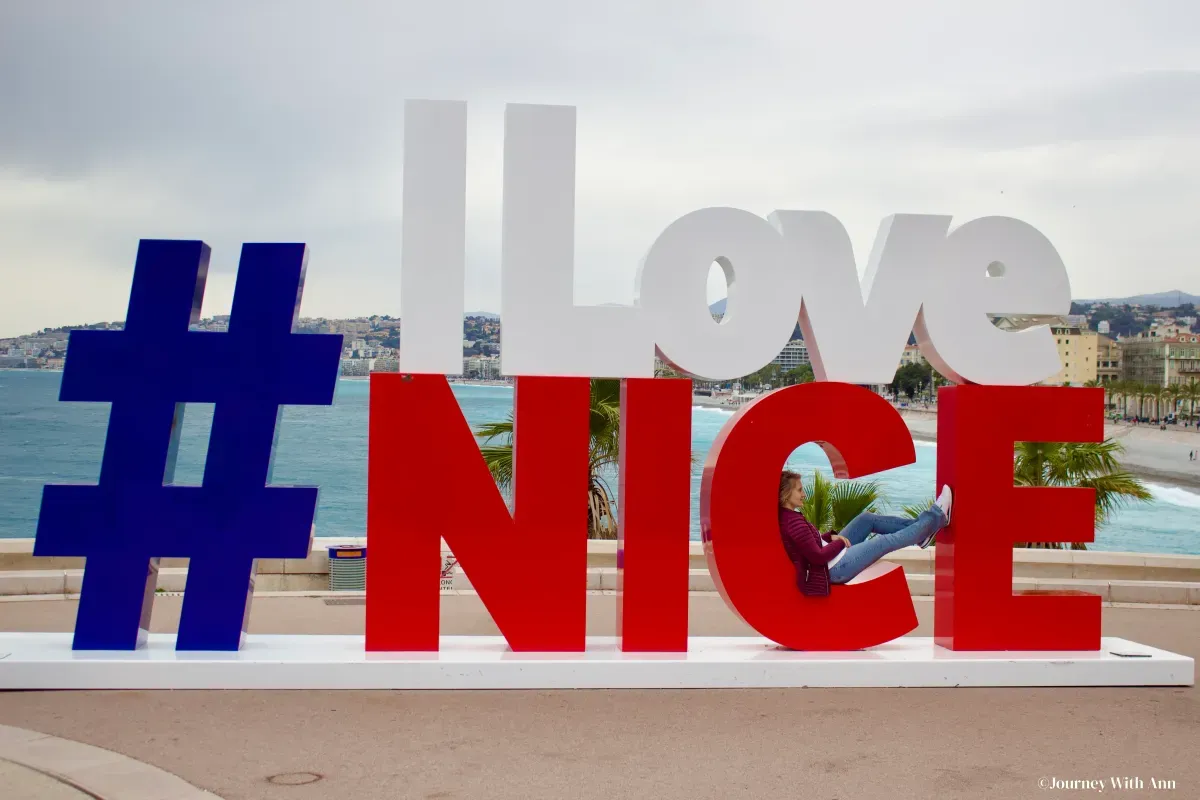
Where to stay in Nice
The best area depends on how you want to spend your time..
- Vieux Nice, or Old Town, is a good choice for atmosphere, restaurants, and easy access to many central sights. It can be lively and noisy at night.
- Carré d'Or is convenient for a first visit. The Promenade des Anglais, shops, restaurants, and the city center are all close by.
- The Promenade des Anglais suits travelers who care most about sea views and quick access to the beach.
- Libération feels more local and can offer better value than the most central tourist areas.
- The streets around Nice-Ville station are practical if you plan to take several day trips by train.
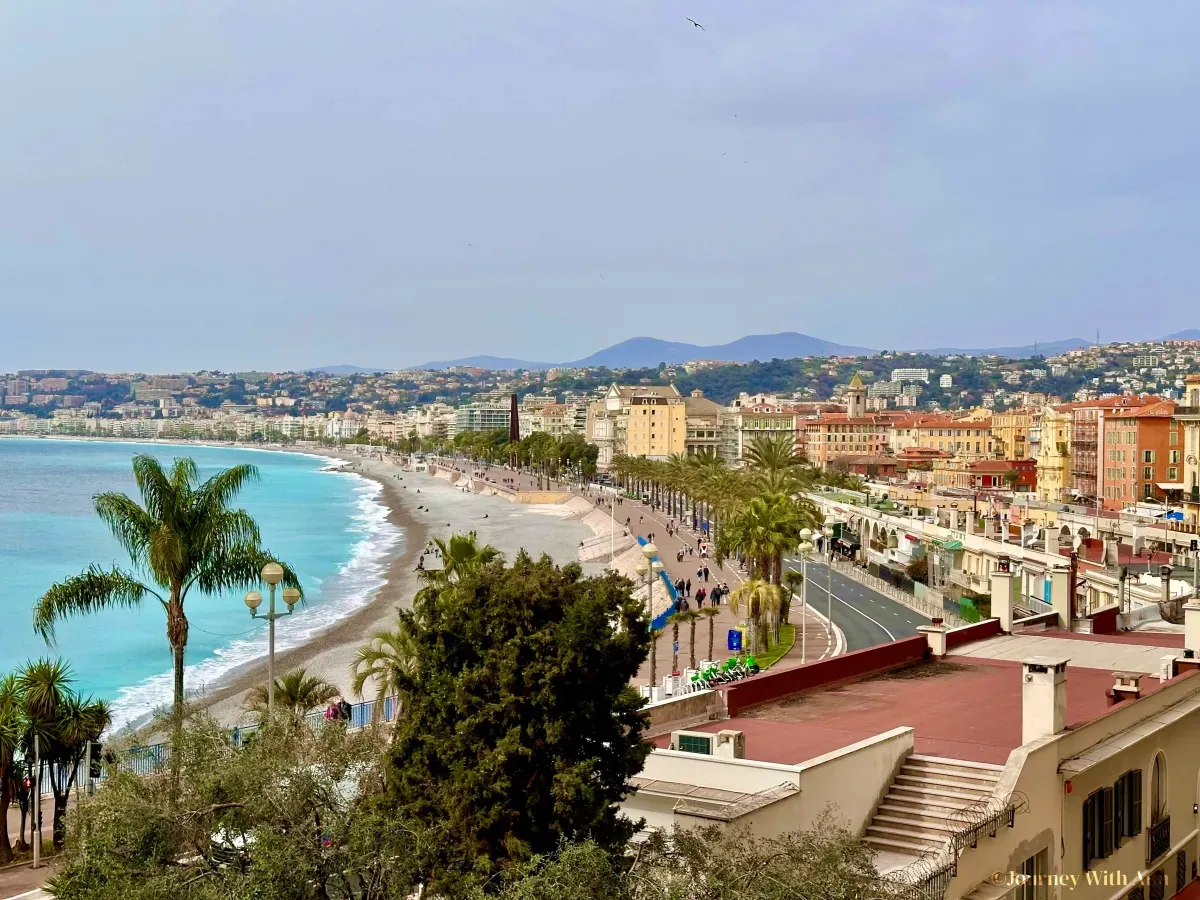
What to know when you arrive
Nice is easy to explore without a car. Tram line 2 connects both airport terminals with the city center and Port Lympia, while the center itself is highly walkable. Trains are often the simplest way to reach Monaco, Menton, Antibes, Cannes, and Villefranche-sur-Mer.
A rental car becomes more useful for smaller villages, inland scenery, or places that are inconvenient by public transport. If you arrive late or have heavy luggage, a taxi or an Uber booked through the official app may be the easier option.
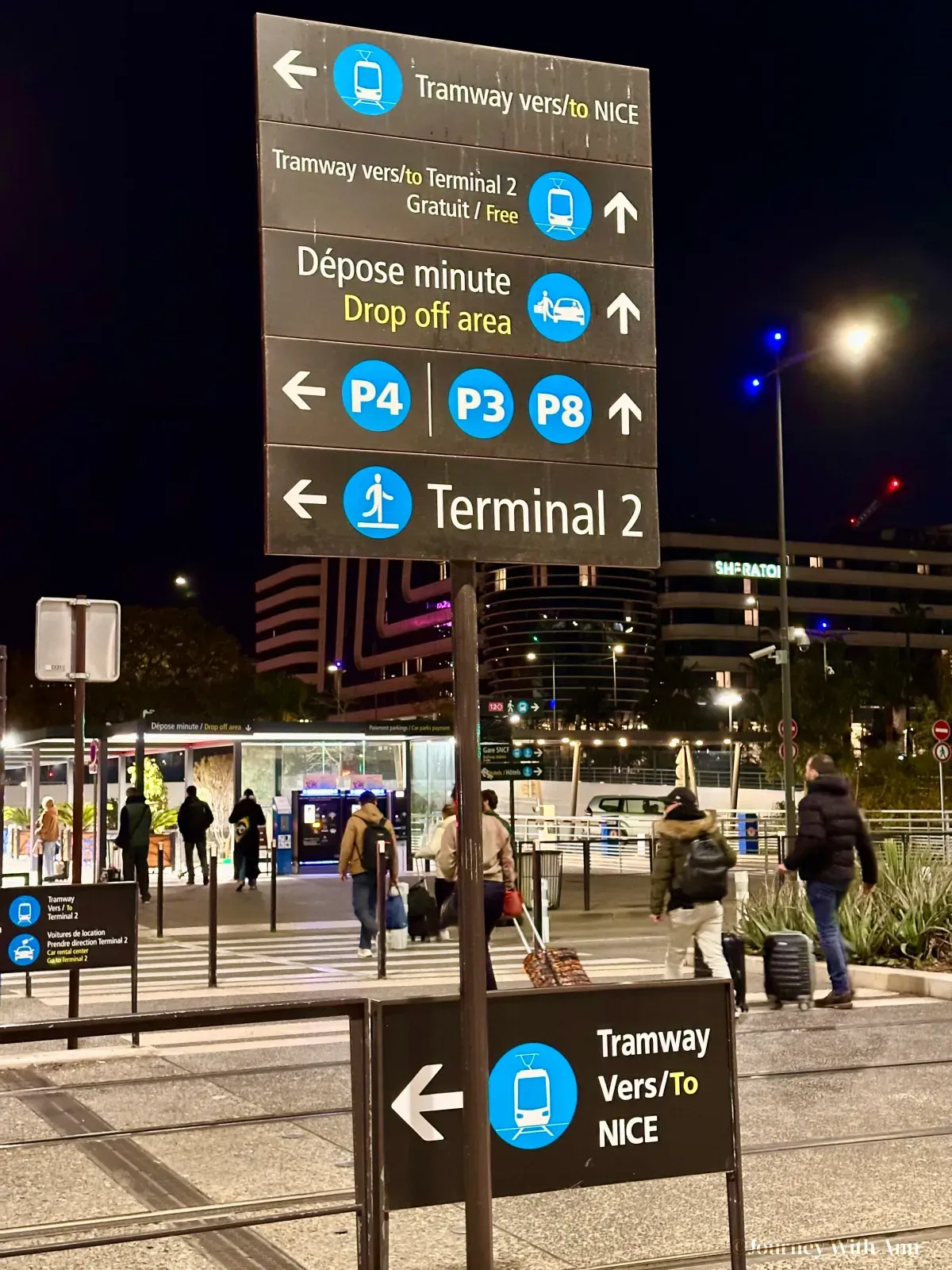
The signs at Nice Côte d'Azur Airport are clear. Follow them to find the tram, taxi stands, and other connections. Ticket prices and transport rules can change, so check my full guide to getting around Nice by tram, train, taxi, and car before you travel.
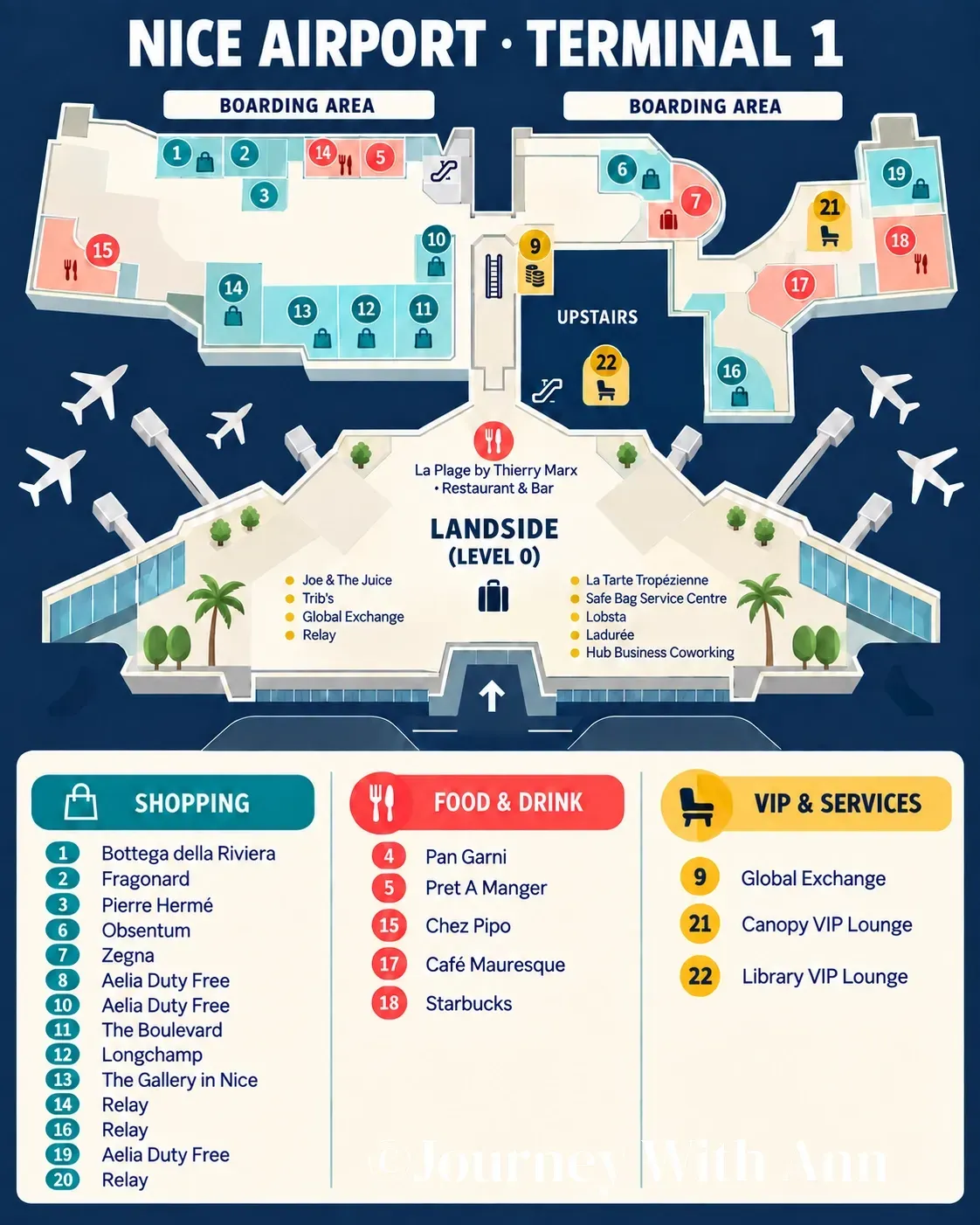
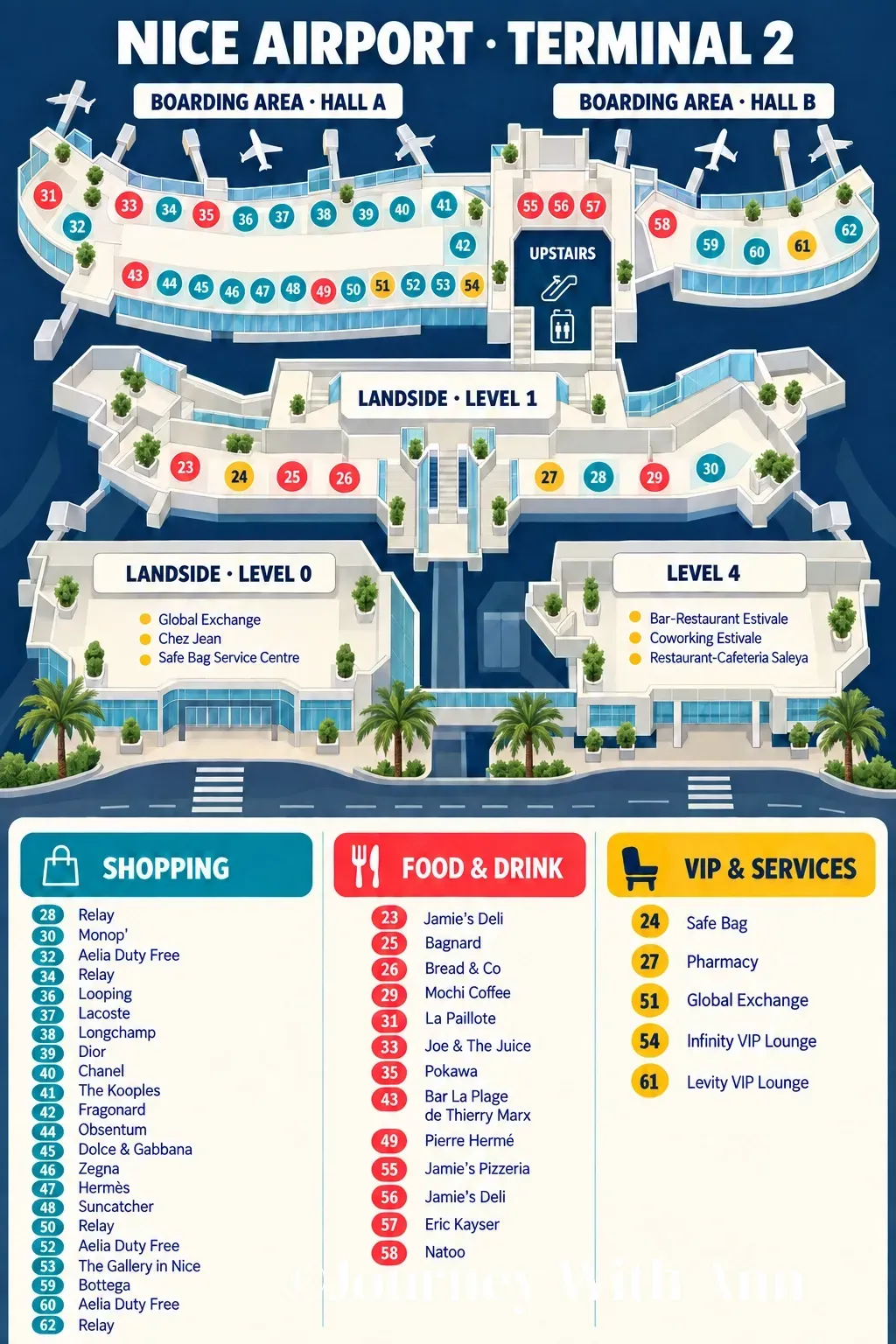
Nice Airport has two terminals. Both have cafes, restaurants, and duty-free shops, but Terminal 2 has the largest selection of stores. The airport shop directory lists Chanel, Dior, Hermès, Longchamp, and other brands there. Terminal 2 also has a pharmacy, which can be useful before a flight. Both terminals have VIP lounges, and access can be booked even when it is not included with your ticket.
Useful services at Nice Airport
Both terminals have free unlimited Wi-Fi and a Service Centre. This is useful if you need to store, weigh, wrap, or send luggage, print a document, leave keys, or buy a travel bag or cage for a pet. If security finds something that cannot go through in your hand luggage, the Service Centre can also arrange storage or shipping, so you may not have to throw it away.
Shop & Collect is useful if you shop before leaving Nice: you can leave your purchases at the airport and collect them when you return. Do not confuse it with the airport's Click & Collect, which lets you order online before your flight and pick up the order at the airport. Nice Access, the airport's fast-track service, can be booked by any passenger, regardless of the airline or destination. Lost something in the terminal? Submit a report through the airport's lost property service. The Car Rental Centre is behind car park P5 at Terminal 2, and there are workspaces in the Hub Business area at Terminal 1 and the Estivale coworking area at Terminal 2.
Best things to do in Nice on a first visit
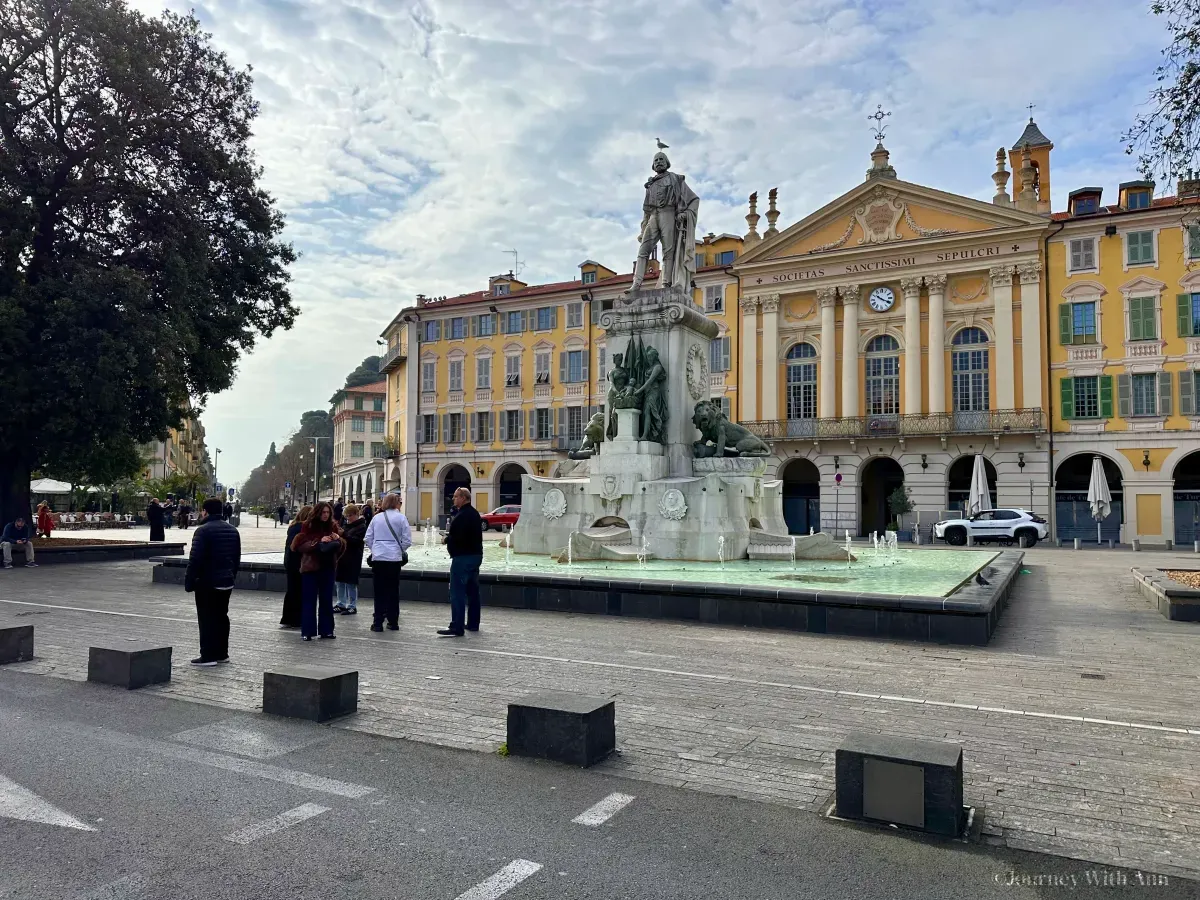
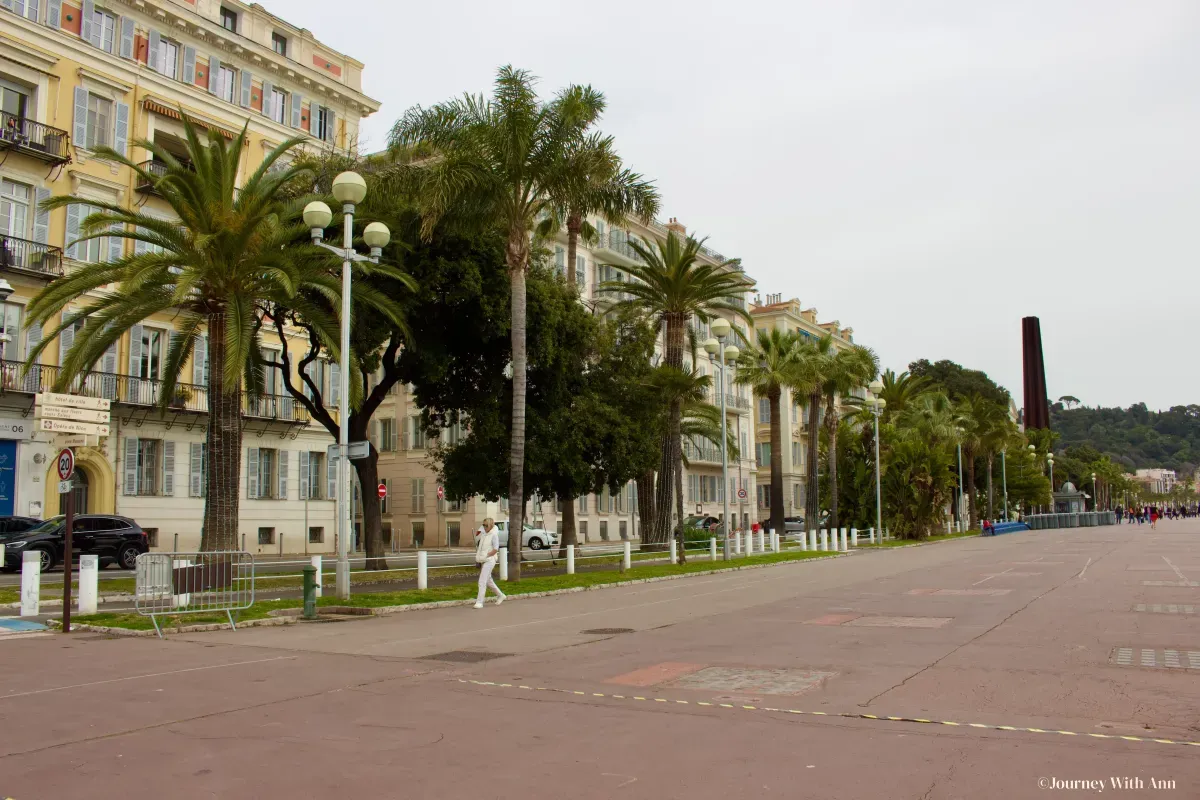
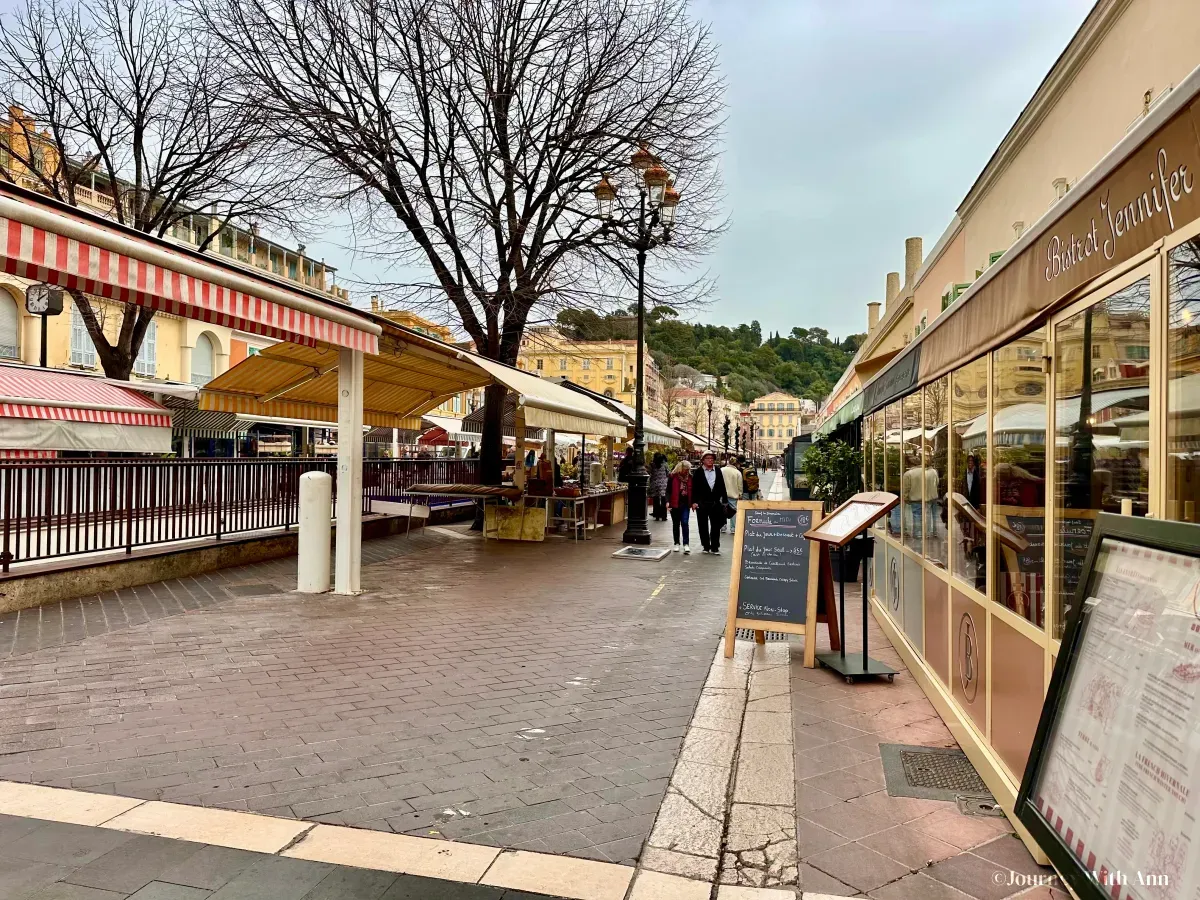
Nice is better at a relaxed pace, but a few places belong on any first itinerary. Start at Place Masséna, walk along the Promenade des Anglais, and wander through the streets of Vieux Nice. Stop at Cours Saleya Market, then make your way up Castle Hill for a wide view over the city and the Mediterranean.
Those are the essentials, not the whole city. My complete guide to the best things to do in Nice has more viewpoints, practical tips, and places worth adding if you have time.
What to know about Nice beaches
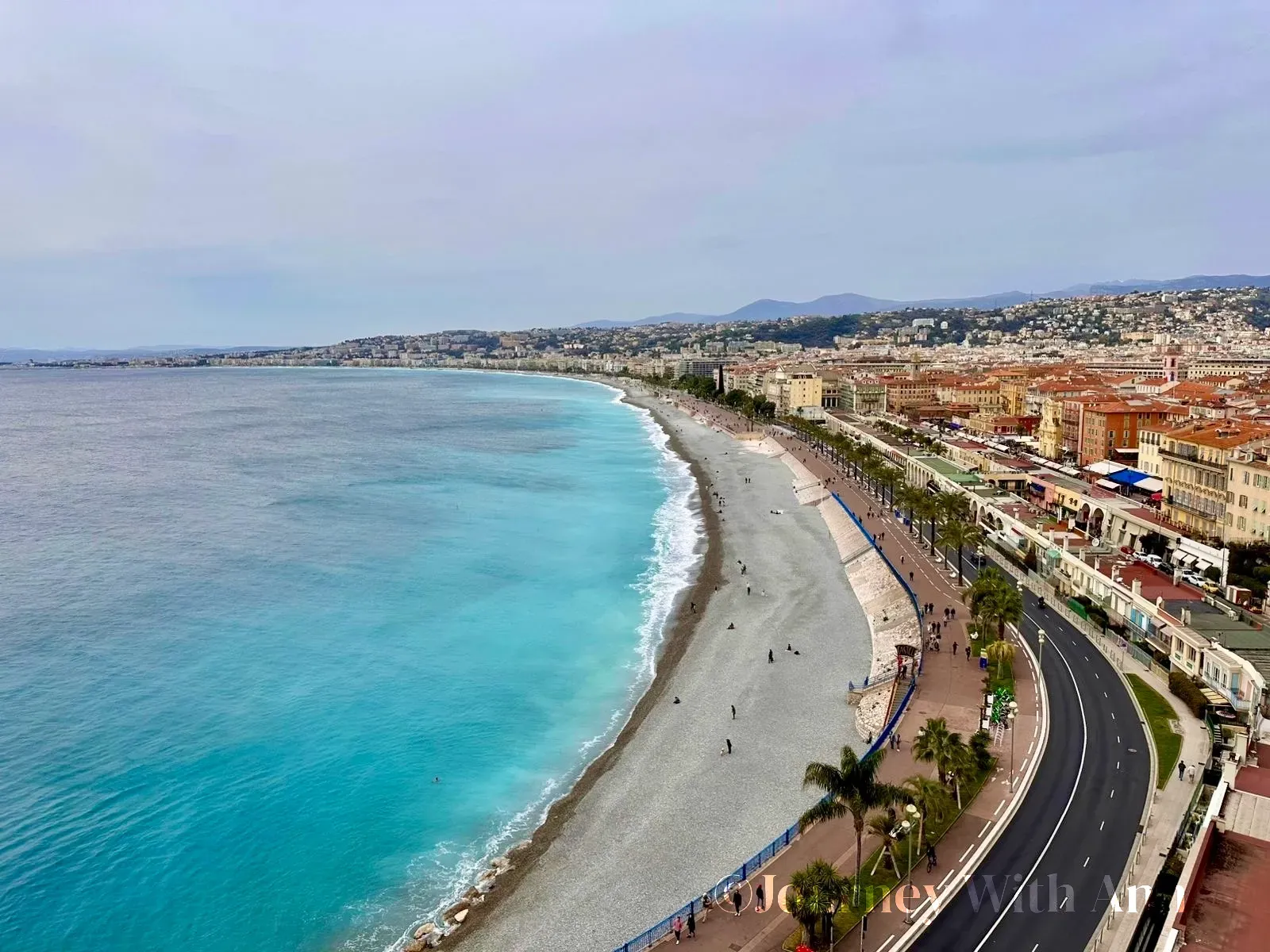
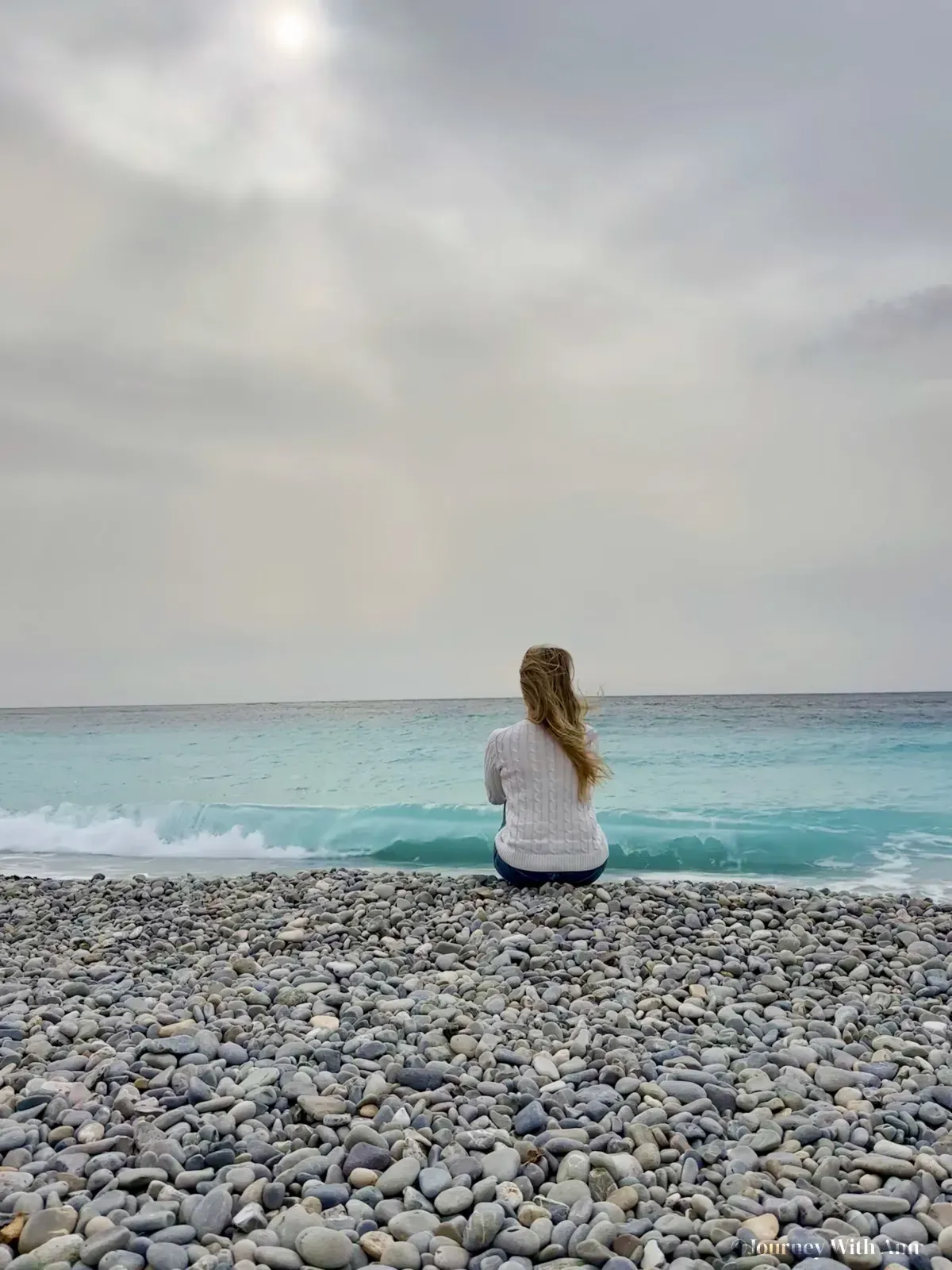
Nice's beaches are mostly pebbled, not sandy. Water shoes make it easier to get into and out of the sea, especially when the water is not calm. A padded mat also makes a public beach much more comfortable.
Along the Promenade des Anglais, you can choose between free public beaches and private beach clubs with sunbeds, umbrellas, restaurants, and other services. On calm, sunny days, the Mediterranean shifts from deep blue to the clear azure color associated with the Côte d'Azur. Mornings tend to be quieter. The beaches fill up later, especially in high season.
My first trip to Nice was in March, so I have only experienced the beaches outside the main swimming season. For now, I can share the practical details I observed. When I return in warmer weather, I will compare the different beach areas, clubs, swimming conditions, crowds, and atmosphere, then share what I find here.
What to eat in Nice
Nice has its own Mediterranean food traditions, but it is also a good place to try the French classics you may have wondered about for years. Before a trip, I like to make a small personal list. I do not fill it with dishes that other people say are compulsory. I choose the ones I genuinely want to taste, then work through the list as I visit markets, cafes, bakeries, and restaurants.
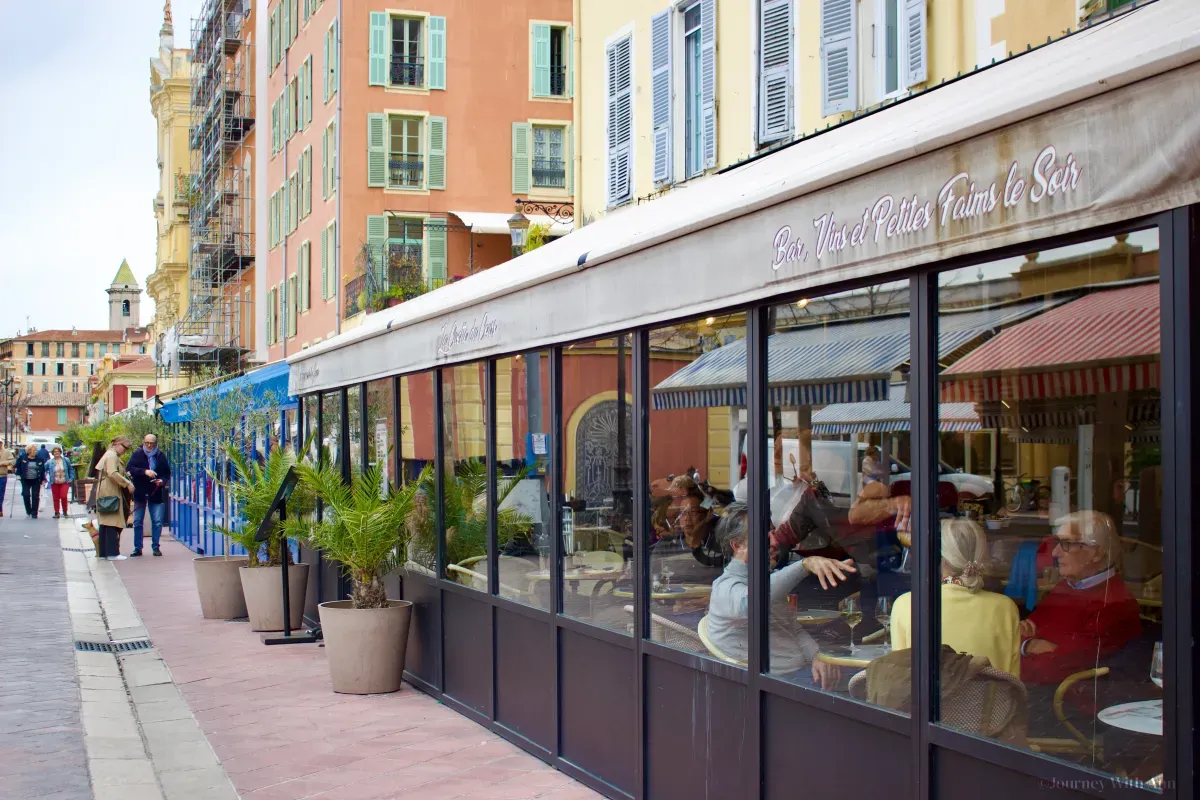
My list combined local specialties with French dishes I had wanted to try for years: oysters, French onion soup, macarons, frog legs, and socca. Nice was where I finally decided to try oysters for the first time. I had always wanted that first taste to happen somewhere oysters were part of the traditional food culture, during the traditional oyster season from September to April, and close to the sea. Nice was ideal, and the experience was genuinely unforgettable. Frog legs had also been on my list for a long time, so I was not going to remove them. Socca stayed too, although that experience became one of the surprises I describe later.
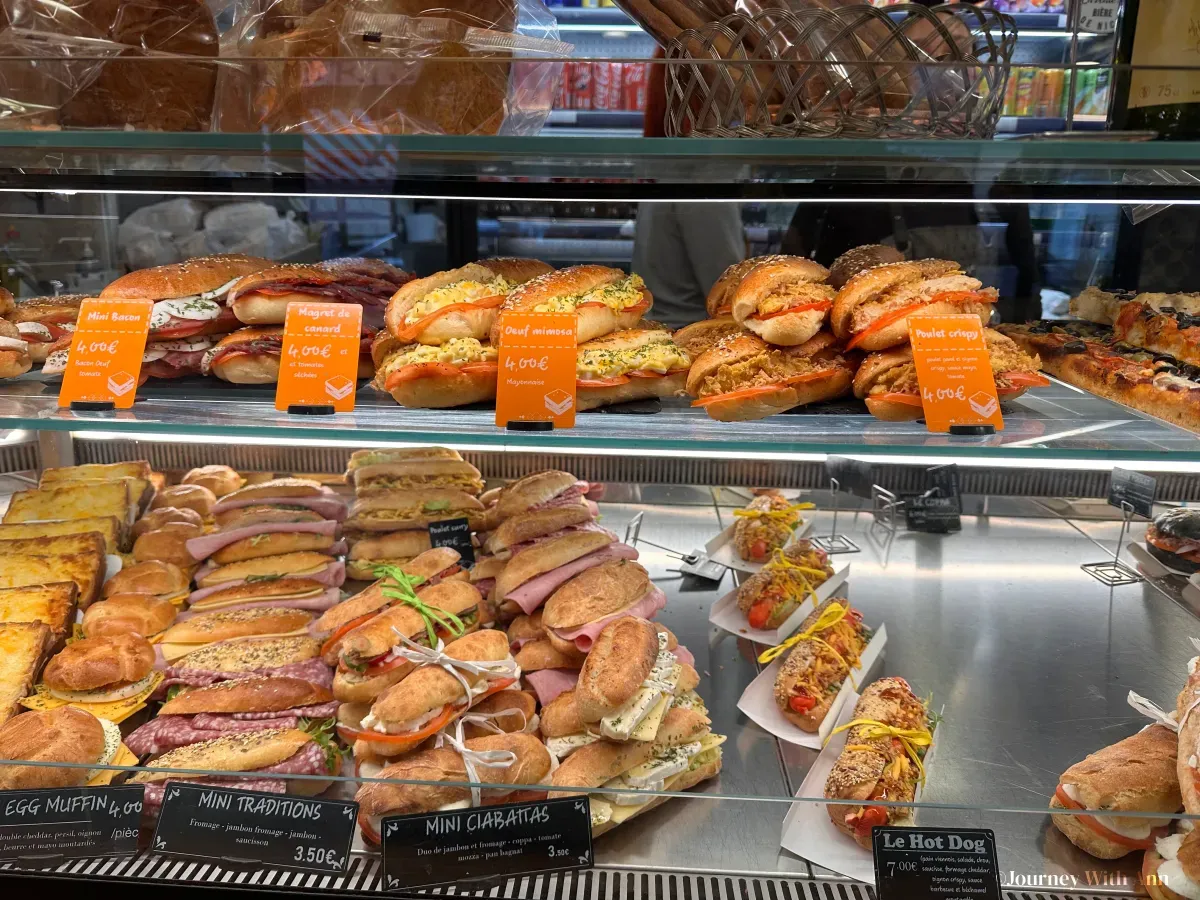
On my first trip, I did not get to try salade niçoise or pan bagnat, although both looked tempting. Next time, I definitely will. Instead, I kept coming back to fresh baguettes with different fillings. They are easy to find in small cafes and neighborhood bakeries, and they make a simple lunch while you explore. My rule was to look around, step into places that caught my eye, and choose what appealed to me. In Nice, food that looks delicious very often tastes just as good.
The croissants deserve their own mention. Some of the best croissants I have ever eaten were in Nice, including the plain ones. They were crisp and flaky outside, then soft and buttery inside.
Fresh fruit, cheese, bread, olives, and other local products can be eaten nearby. If you have a sensitive stomach, this can be a much more comfortable way to have a light meal. You can choose something simple, see exactly what you are buying, and put together your own lunch without committing to a heavy restaurant meal.
Before choosing a restaurant, read the notes below about tourist traps, queues, and the busiest-looking places. I am also preparing a separate article about what to eat in Nice and where to try the city's traditional dishes, with my own impressions and recommendations. There is too much to taste here for a few paragraphs.
What most bloggers don't tell you about Nice
Before my first trip, I read plenty of guides about the beaches, viewpoints, restaurants, and Promenade des Anglais. The small practical details were harder to find, even though they can change how a day feels once you arrive. These are the things I noticed during my first stay.
1. Vieux Nice is beautiful, but it can be noisy at night
Vieux Nice is compact. Compared with old towns such as Kotor in Montenegro, I did not find it especially difficult to explore on foot. Still, cobblestones, uneven paving, and occasional steps are part of the experience. Wear comfortable shoes and watch where you step.
Old Town is full of bars, restaurants, terraces, and people who stay out well into the evening. That energy is part of its charm, but nights can be noisy and unpredictable in any season. If you are a light sleeper, think twice before booking a room directly above one of the busiest streets.
2. Castle Hill is higher than it looks
Castle Hill, or Colline du Château, is one of the best viewpoints in Nice, but reaching the top takes effort. Walking up is free. In hot weather, wear comfortable shoes, carry water, use sun protection, and do not underestimate the heat. A hat helps with more than photographs.
If stairs are difficult, there is a free lift near Rue des Ponchettes, at the foot of the hill. During my visit, I was told that dogs had to be placed in a carrier while waiting for and riding in the lift. A large dog may not fit, which could leave walking as the practical option. Rules can change, so check the current conditions before you go.
Another option is the paid tourist train that leaves from the Promenade des Anglais near Jardin Albert Ier. Its panoramic route climbs Castle Hill and includes a short stop at the top.
3. Water shoes make Nice's beaches much easier
Nice's beaches are pebbled rather than sandy. You can manage without water shoes, but I still recommend packing them, especially when the Mediterranean is less calm. Moving pebbles make getting in and out of the water more awkward than it looks from the Promenade.
4. Restaurants may close between lunch and dinner
Many restaurants stop serving food or close completely between lunch and dinner. If you want a proper meal in the middle of the afternoon, you may have fewer choices than expected. Check opening hours before you get very hungry.
5. Watch where the locals queue
A line of local people waiting before a restaurant reopens can tell you more than an impressive sign or polished terrace. Large groups of 20 or 30 people are a different signal. They may be organized tours eating at restaurants that work regularly with tour operators.
That does not make a restaurant bad. It may simply be set up for a faster, higher-volume dining experience rather than the relaxed meal you imagined. Read the menu, look at the room, notice who is eating there, and trust your instincts.
6. Wait to be seated at restaurants
Do not walk into a restaurant, choose an empty table, and sit down unless the place clearly allows self-seating. In France, it is more customary to wait for a member of staff to greet you and show you to a table. It takes a few seconds and avoids an awkward start.
7. Buying a public transport ticket is not always enough
Buying and validating a ticket are separate steps. Lignes d'Azur requires validation each time you board, including during a connection. The validator may be on the platform, tram, or bus, depending on where you enter the network. The official validation guide explains the current rules.
I will add a photo of the validator so first-time visitors know what to look for. For airport transport, trams, trains, buses, taxis, parking, and car rental, see my guide to public transport and driving in Nice.
8. Arrange parking before you arrive by car
Parking in central Nice can be one of the least enjoyable parts of driving here, especially if your accommodation has no private space. Before booking, check nearby garages yourself or ask the property manager exactly where you can leave the car.
A beautiful apartment in the perfect location feels less perfect when you are circling unfamiliar streets with all your luggage in the back..
9. Keep an eye on your belongings
I use the same rule in Nice as in any busy tourist city: never leave belongings unattended. Pay extra attention in crowded places, on public transport, at markets, and on the beach when everyone in your group wants to swim at once.
Basic precautions make it easier to relax without spending the day worrying about your things..
10. The Promenade can be surprisingly windy
Nice may look warm and still in photographs, but the Promenade des Anglais can be very windy. Air coming straight off the Mediterranean changes how the temperature feels, particularly outside the hottest summer months. When you check the forecast, remember that the number alone does not tell you how the day will feel by the sea.
11. Use official transport for late-night airport arrivals
If you use Uber from Nice Airport, request the ride through the official app and follow signs to the designated pickup area. Do not accept unofficial offers from people who approach passengers in the terminal or pickup zones.
This matters most late at night, when you are tired, carrying luggage, and arriving in an unfamiliar city..
12. About socca...
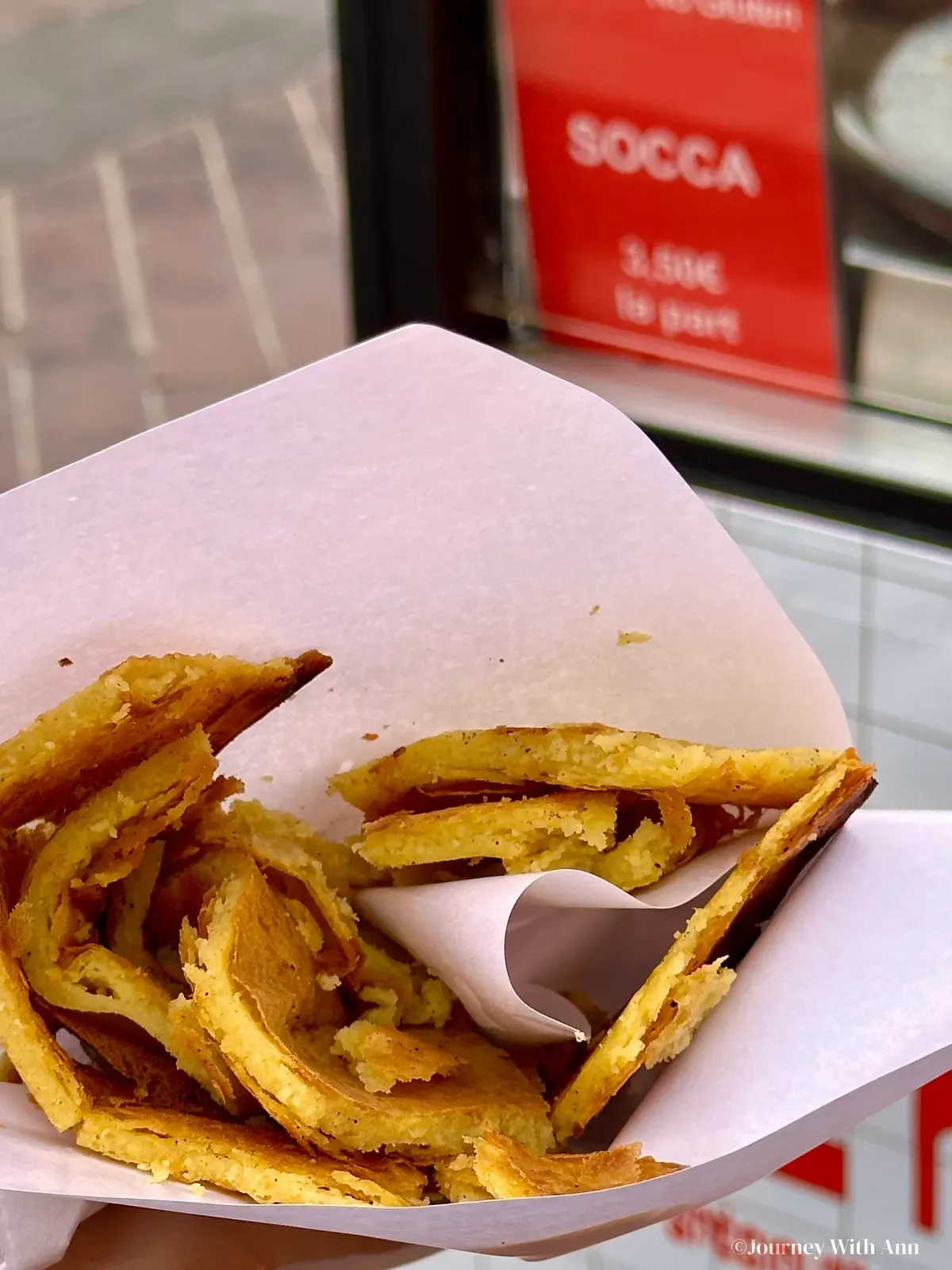
Almost every Nice food guide says you have to try socca, the city's traditional chickpea pancake. It is sold around the market and in the busy streets of Vieux Nice, so naturally we tried it too.
There were three of us, and none of us liked it. The portion we ate was very oily, with a strong fried taste, and it was far less appealing than we expected after seeing so many recommendations.
Food is personal, and perhaps we chose the wrong place. You may order socca somewhere else in Nice and love it. Based on our experience, though, I would not treat it as a local specialty that everyone absolutely has to try. If you are curious, order one portion and decide for yourself.