I have also included a separate itinerary section for 1, 2, 3, or 4 days. The walking times are realistic, and I point out the routes that become more tiring than they look on a map. At the end, you will find some of the easiest day trips from Nice by train, with notes based on my own journeys along the French Riviera.
In this guide
- Nice is more than its famous sights
- The essential attractions
- More places worth seeing in Nice
- Best photo spots in Nice
- Plan your Nice itinerary for 1, 2, 3, or 4 days
- Best day trips from Nice by train
- What should you not miss in Nice?
Nice is more than its famous sights
At first glance, Nice seems easy to understand. There is the Mediterranean, the Promenade des Anglais, the colorful streets of Vieux Nice, Castle Hill, and a small group of viewpoints that appear in almost every set of French Riviera photographs.
Walk beyond those landmarks and the city starts to open up. Roman ruins sit high above the center. Belle Époque villas hide behind gardens, and richly decorated Baroque churches appear between the narrow streets of Old Nice. Around Port Lympia, colorful fishing boats share the water with modern yachts. Higher up, quiet viewpoints look across the coast, while the city's museums tell the stories of artists drawn here by the Mediterranean light.
This is why deciding what to see in Nice is not as simple as picking a handful of famous attractions. Many central sights are close enough to combine in one day, but seeing them and having time to enjoy them are different things. A route that looks short can become hours of walking once you add viewpoints, photographs, a market, a museum, and all the times you stop simply to look at the sea.
The guide goes beyond a standard attraction list for that reason. It includes the must-see places in Nice, quieter viewpoints, familiar photo locations, a few easy-to-miss angles, and practical routes for stays of one to four days.
There is also a section on train trips to Monaco, Cannes, Villefranche-sur-Mer, Èze, Antibes, Menton, and Saint-Jean-Cap-Ferrat. Some details make far more sense after you have taken these journeys yourself, especially the difference between a simple outward trip and a busier return in the evening.
One note about the order: many of Nice's best-known attractions are public squares, promenades, beaches, parks, and viewpoints. There is no reliable live visitor ranking that lets them be compared fairly. I have therefore avoided inventing one. A star marks the places included in Nice's official list of ten essential attractions.
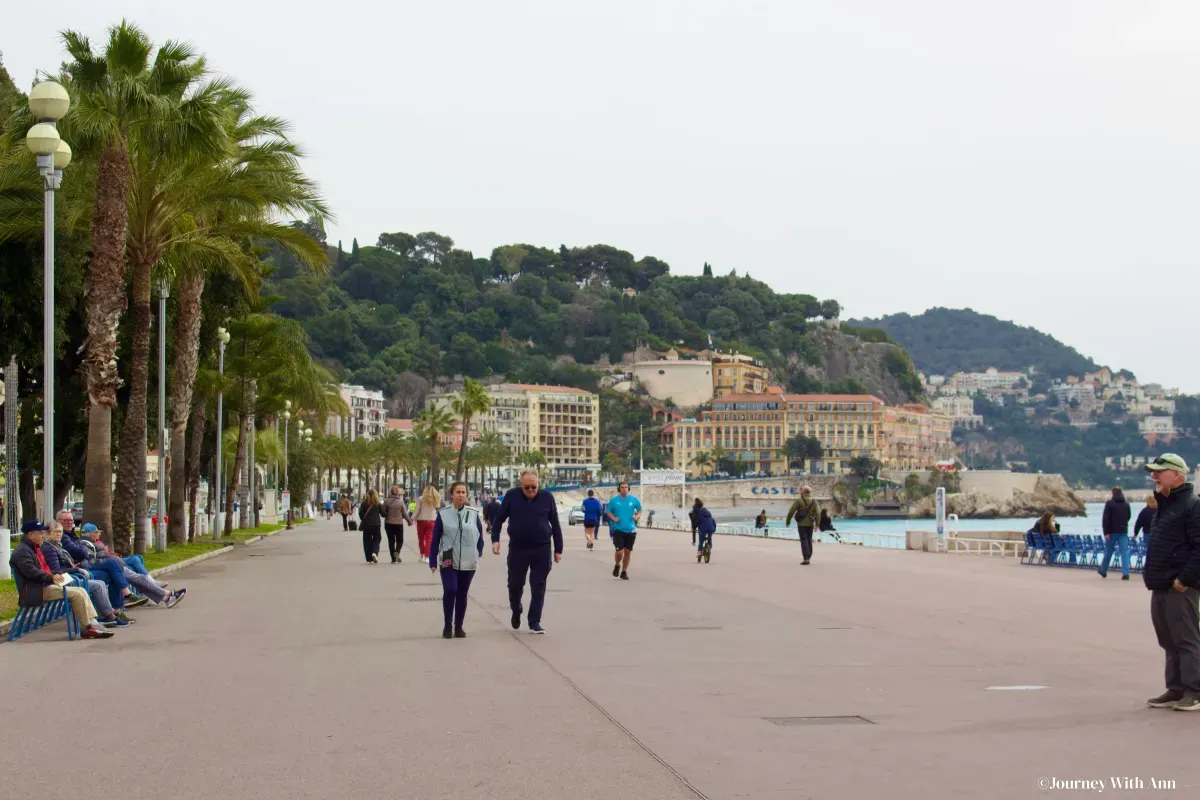
Promenade des Anglais in Nice. Click the image to enlarge it.
The essential attractions
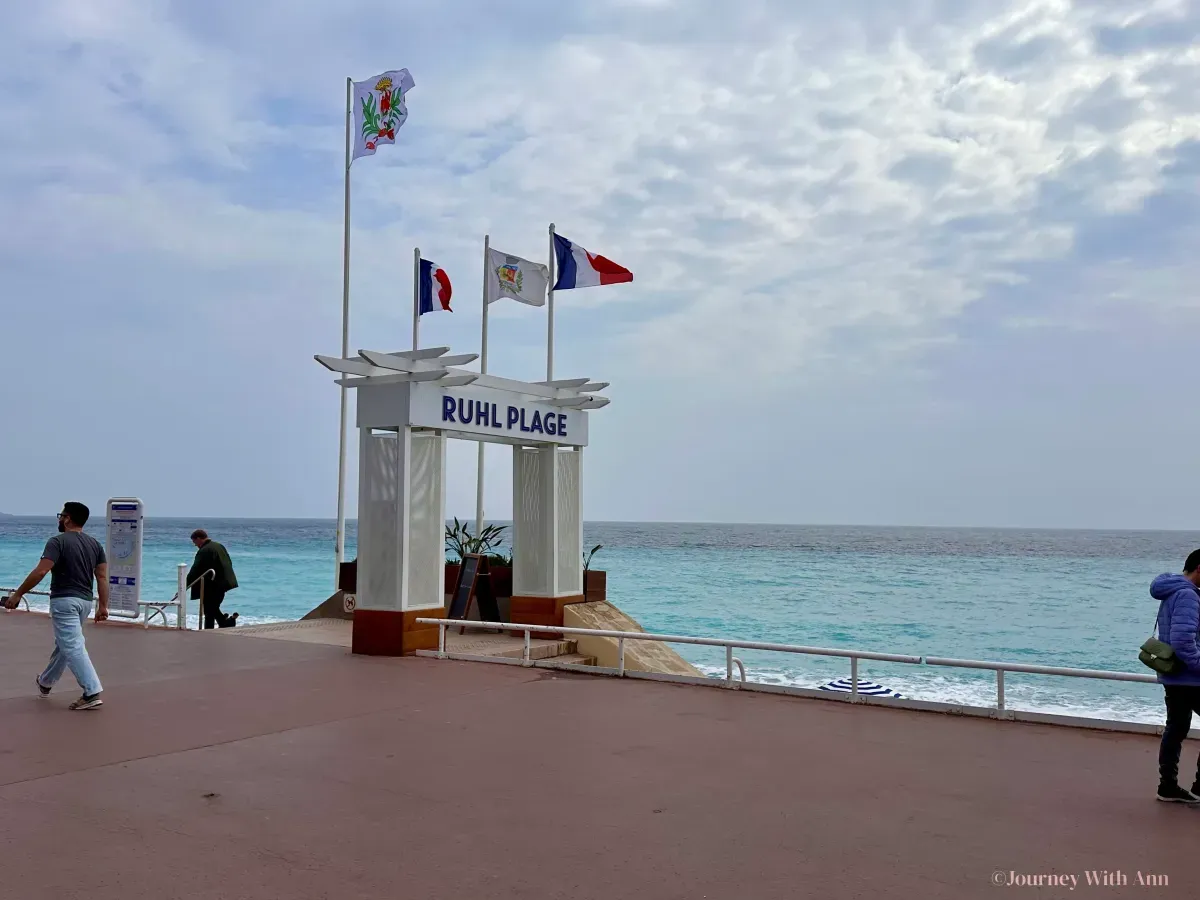
- Walk the Promenade des Anglais ★If there is one place most people associate with Nice before they arrive, it is the Promenade des Anglais. The avenue follows the Baie des Anges for about seven kilometers. It is part tourist attraction and part everyday public space, used by early runners, cyclists, dog walkers, friends meeting by the water, swimmers, and anyone who wants to sit on one of the blue chairs and watch the Mediterranean.The Nice Côte d'Azur Tourist Office calls it the postcard image of the city. It is also closely tied to Nice's UNESCO-listed heritage as the "Winter Resort Town of the Riviera."You do not need to walk the full seven kilometers. For a first visit, I would concentrate on the central stretch between the Hôtel Negresco, Jardin Albert Ier, Quai des États-Unis, and Rauba Capeu. Come during the day, then return in the evening if you can. The promenade feels different once the light softens and the sea takes on the colors of sunset.Best for first visits, sea views, walking, photography, and sunset. Allow 45 to 90 minutes, or longer if you stop often or sit by the sea.
- Explore Vieux Nice, the Old Town ★Vieux Nice is where I recommend putting the map away for a while. The Old Town is compact enough that getting a little lost becomes part of the pleasure. Its narrow streets run between ochre, yellow, orange, and faded red façades, with bakeries, restaurants, churches, shops, and passages that suddenly open onto busy squares.Do not use it only as a route between attractions. Wander along the smaller streets around Rue Droite, Rue de la Préfecture, Place Rossetti, and Rue Pairolière. Look for Sainte-Réparate Cathedral, the Church of Gesù, the Chapelle de la Miséricorde, and Palais Lascaris, one of the city's finest examples of civil Baroque architecture.Place Rossetti is especially atmospheric, with the cathedral rising directly above the surrounding terraces. Allow 1.5 to 3 hours, depending on how often you stop for food, photographs, or a closer look inside the churches.
- Visit Cours Saleya Market ★Cours Saleya changes with the time and day. In the morning, flower, fruit, vegetable, food, and local product stalls fill the heart of Old Nice with color. Cafés and restaurants ring the market, and later in the day the whole area begins to feel like one large outdoor meeting place.The tourist office lists Cours Saleya among the 100 most picturesque markets in France. On Mondays, the usual flower and food market gives way to an antiques market.Many people miss one of the best views. Climb the Ponchettes steps opposite Place Pierre Gautier, then turn around and look down over the market. From above, its colors and layout are much easier to see. Morning is the best time for the market atmosphere, flowers, food, and photographs.
- Climb Castle Hill for the best views of Nice ★Castle Hill, or Colline du Château, is essential even if you have only one day in Nice. Despite the name, there is no intact castle at the top. The fortress was destroyed in the early 18th century. Today, the hill is a large green park with paths, archaeological traces, viewpoints, a waterfall, and wide panoramas over the city.The western side looks across the curve of the Baie des Anges, the Promenade des Anglais, Old Nice, and the city stretching toward the airport. Walk to the other side and the view changes completely. Port Lympia lies below, with Mont Boron and the coast toward Villefranche-sur-Mer behind it. Do not miss the Castle Waterfall, one of the park's most recognizable sights.You can use the stairs or take the free lift near Rue des Ponchettes. In summer, do not underestimate the climb because it looks short on a map. Water, comfortable shoes, and a hat make a noticeable difference. Allow 1 to 3 hours.
- Stop at Bellanda TowerMany visitors are so focused on reaching the top of Castle Hill that they hurry past one of its best intermediate viewpoints. Bellanda Tower looks out over the Baie des Anges, and the tourist office describes it as one of the finest views across the bay.It works particularly well for photographs. You are high enough to see the curve of the coast, but still close enough to the rooftops and waterfront to keep plenty of detail in the frame. I would remember this spot if you want a view that differs from the standard Castle Hill panorama.
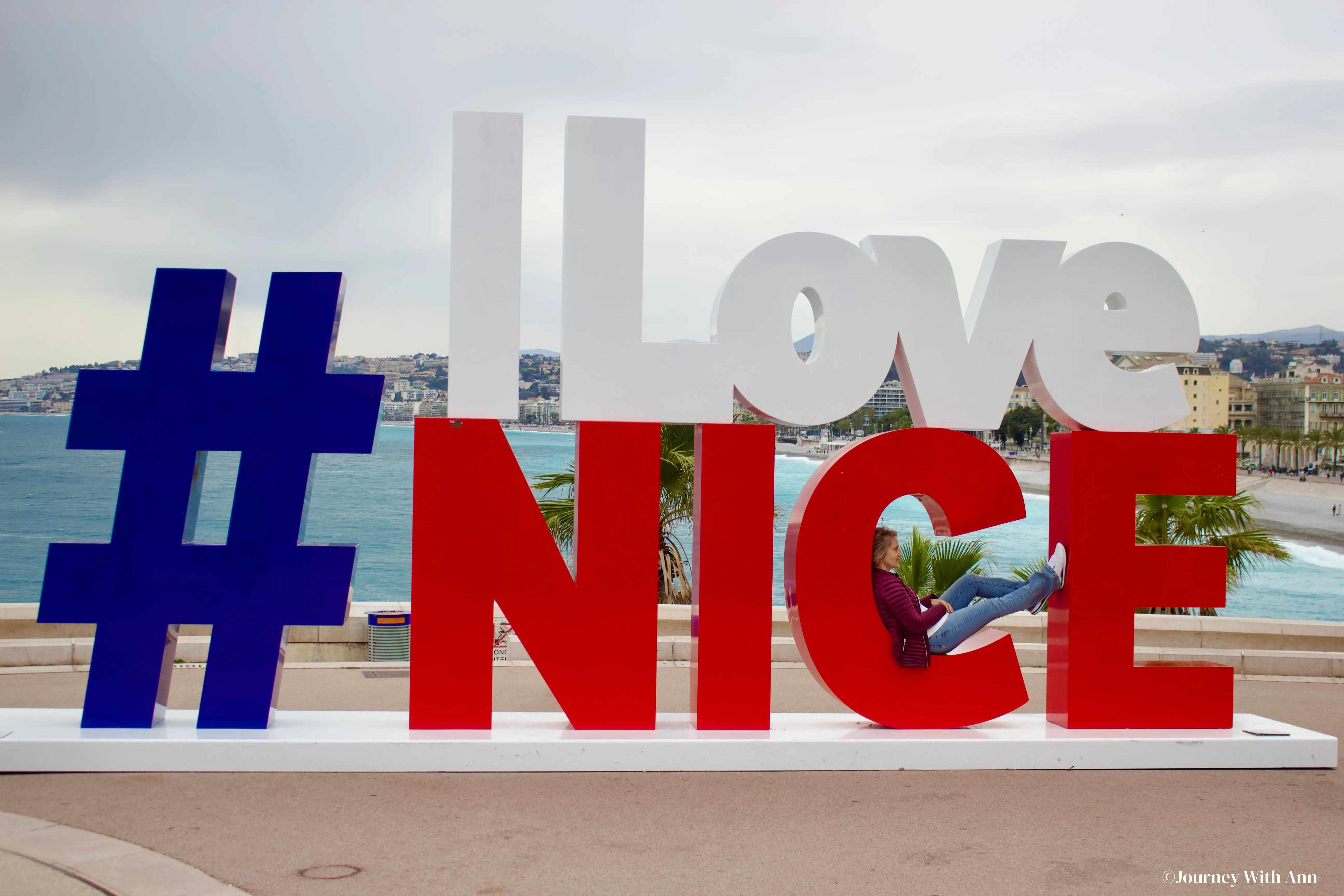
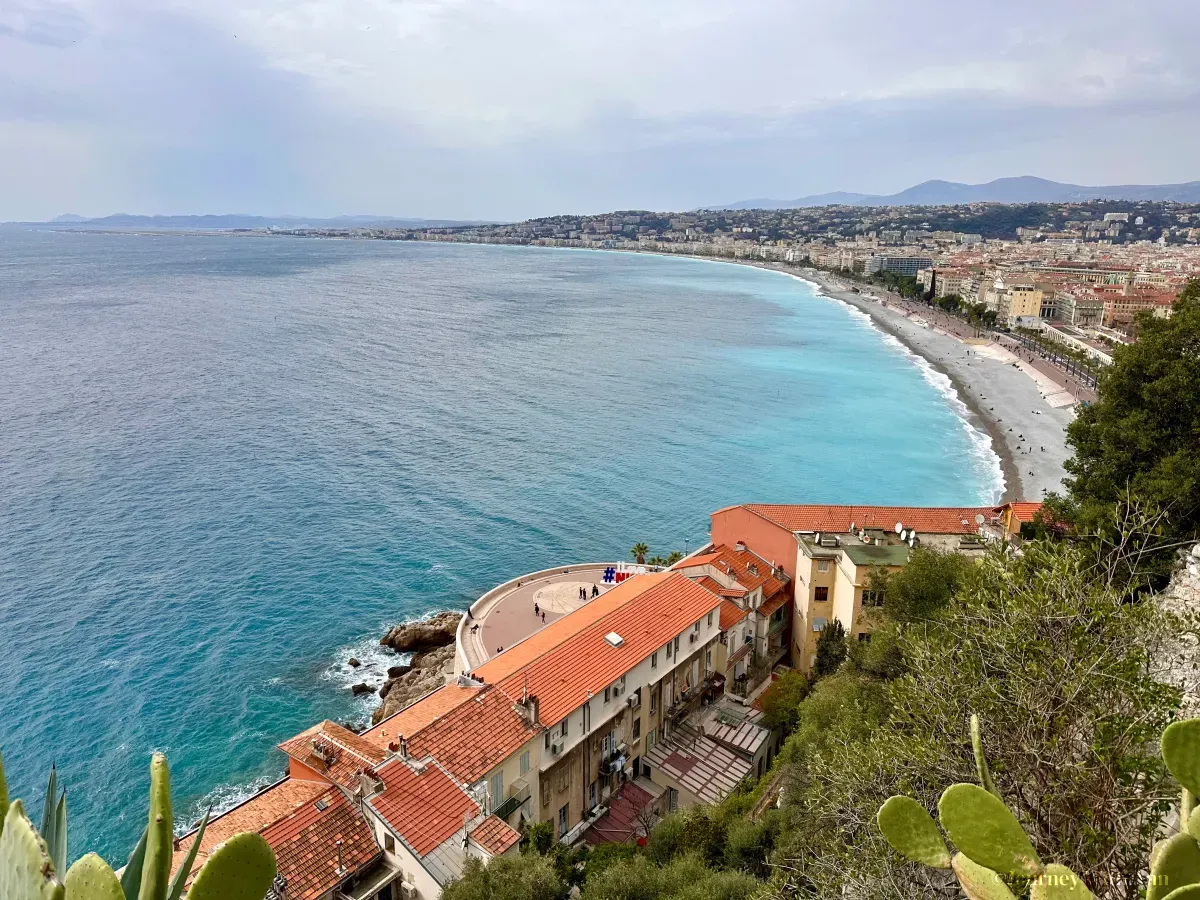
- Take the classic photo at Rauba CapeuThe familiar photograph of Nice, with the #ILoveNice sign in front of the full curve of the Promenade des Anglais, is usually taken at Rauba Capeu. The official visitor guide calls it the city's most photographed spot.It sits between the Old Town, Castle Hill, and the port, so it is easy to include in almost any central walking route. Visit during the day for the intense blue of the Mediterranean, or come back near sunset for softer light over the Baie des Anges.Remember the name too. In Niçois, Rauba Capeu refers to a wind strong enough to "steal your hat." Stand there on a windy day and the name makes perfect sense.
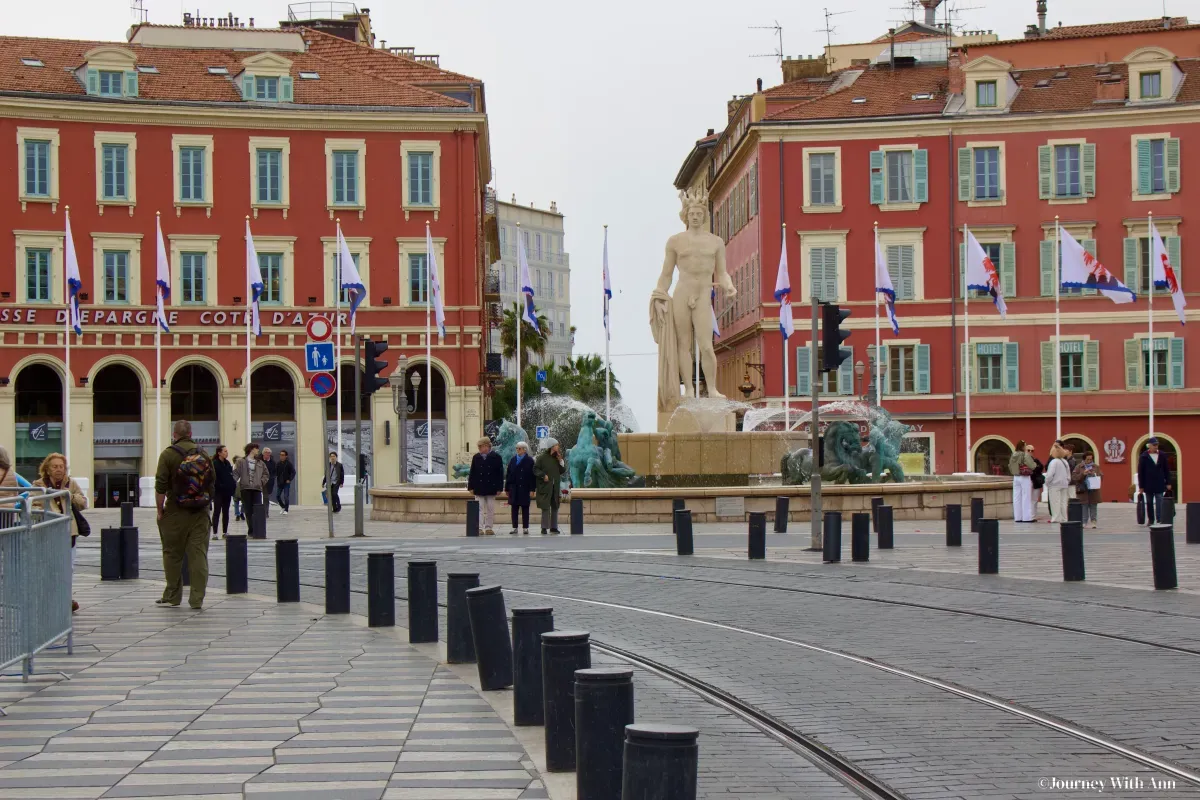
- See Place Masséna by day and again at night ★Place Masséna is the point that seems to connect everything: Old Nice, Avenue Jean Médecin, Jardin Albert Ier, Promenade du Paillon, and the route to the sea. Its red façades, black-and-white paving, and Fontaine du Soleil with Apollo make it one of Nice's most recognizable public spaces.I particularly recommend going back after dark. The seven figures of Jaume Plensa's Conversation à Nice light up above the square, changing the atmosphere completely. A daytime photograph and an evening photograph can feel as though they were taken in two different places.
- Walk through Promenade du Paillon ★Promenade du Paillon begins beside Place Masséna and runs through the center as a long green corridor. Its best-known feature is the large reflecting pool with dozens of fountains, especially photogenic when the sky and surrounding buildings appear in the water. There are also gardens, misting areas, playgrounds, and places to sit between attractions.I would not plan half a day around it. The park works best as part of a walk between Place Masséna, Old Nice, and Place Garibaldi.
- Visit Place GaribaldiPlace Garibaldi has a different personality from Place Masséna. Its yellow façades and arcades give the square a more Italian feeling, while the surrounding streets lead toward the port and Old Town.Look closely at the façades. Much of the architectural detail is trompe-l'œil, and it photographs particularly well in soft light. The tourist office describes Place Garibaldi as the oldest major square in Nice. From here, Port Lympia is only a short walk away.
- Walk around Port Lympia ★The port shows another version of Nice. Bright façades surround traditional wooden pointus fishing boats, modern yachts, quayside restaurants, and a harbor backed by steep hills.Walk around several quays instead of taking one photograph and leaving. The view changes with each side of the harbor. Nice's official visitor guide includes Port Lympia among the city's essential attractions and draws attention to the mix of traditional boats and modern yachts.
- Continue toward Cap de Nice ★Once you pass the port, Nice becomes quieter and more residential. The walk toward Cap de Nice is one of my favorite recommendations for travelers who have already seen the central attractions and want somewhere less crowded.Follow the coast past La Réserve toward the rocky coves and coastal paths. This stretch feels much wilder than the central Promenade des Anglais. The official visitor guide describes Cap de Nice through its rocky inlets, clear water, and paths beside the sea.
- Go up to Mont Boron for a different panoramaCastle Hill gives you the classic view of Nice. Mont Boron gives you a sense of scale. Its forest park covers about 57 hectares, with viewpoints facing Nice and Villefranche-sur-Mer. From the upper park and Fort du Mont Alban, you can look toward the port and Baie des Anges in one direction, then toward Villefranche, Saint-Jean-Cap-Ferrat, and the coast in the other.It is also much quieter than Castle Hill. If photography matters to you, Mont Boron belongs on the list.There is an energy warning, though. Walking from the port to the upper viewpoints is entirely possible, but the climb can turn a relaxed sightseeing day into a workout. In hot weather, I would use public transport for at least part of the ascent.
- Visit the Matisse Museum and Cimiez ★Cimiez deserves more attention than it receives in many short itineraries. The hillside neighborhood combines art, archaeology, gardens, and Belle Époque architecture within a fairly compact area.The Matisse Museum occupies a red-ochre villa beside the Cimiez gardens and Roman archaeological site. Nearby, you can see the remains of Cemenelum, including Roman baths and an arena, then visit the Archaeology Museum. The settlement developed from the time of Augustus and later became an administrative center of Alpes Maritimae.Continue to Cimiez Monastery and its gardens. They are peaceful, carefully maintained, and a welcome break from the intensity of the center. Also look for the former Excelsior Régina Palace, associated with Queen Victoria and the years when wealthy European travelers spent their winters in Nice.
- Visit the Marc Chagall National MuseumEven if museums do not normally shape your itinerary, the Marc Chagall National Museum is worth knowing about. Its collection grew from the artist's donations, including the Biblical Message cycle and preparatory work. Later gifts, purchases, deposits, and bequests broadened it across Chagall's career. The museum now holds one of the world's most important public collections of his work.The Chagall Museum combines well with Cimiez. Still, I would not rush through both this museum and the Matisse Museum if you genuinely enjoy art. Give yourself time to look.
- See Saint Nicholas Russian Orthodox CathedralSaint Nicholas Cathedral looks almost surreal against the Mediterranean architecture of Nice. Inspired by traditional Moscow church design, it is filled with domes, icons, frescoes, woodwork, and an elaborate iconostasis.The cathedral is not next to Old Town, so it takes a small detour. Visually, though, it differs from almost everything else in the city. I would include it if you enjoy architecture or photography.
- Visit Musée MassénaMusée Masséna is one of the most useful places for understanding how Nice became the city you see today. The villa stands directly beside the Promenade des Anglais and follows the city's history from the 18th century through the Belle Époque and into the early 20th century.The building and gardens are worth seeing before you even begin looking at the collection. It also combines easily with the Negresco and a walk along the Promenade.
- Discover Palais LascarisPalais Lascaris can disappear behind the bigger names on a Nice itinerary. Hidden in Vieux Nice, the Baroque palace has frescoes, ornate salons, and a monumental staircase. The city's visitor guide describes it as the most remarkable example of civil Baroque architecture in Nice.Add it while you are already exploring Old Town, especially if you enjoy historic interiors, architecture, or smaller and quieter museums.
- Climb Saint-François TowerTour Saint-François offers another less obvious panorama over Nice. The climb follows a narrow spiral staircase, and the tower gives you a 360-degree view over the roofs, hills, and sea. Official tourism pages describe the viewpoint as roughly 50 meters high.It is a good alternative if you have already photographed the city from Castle Hill. Check the opening schedule before visiting, since access is limited and the climb is ticketed.
- Visit the Archaeological CryptThe archaeological crypt lies just off Place Garibaldi. At almost 2,000 square meters, the Nice Côte d'Azur Tourist Office describes it as France's second-largest archaeological crypt by area after the Louvre site in Paris.Inside, you can see several stages of Nice's medieval and later fortifications. Visits are generally organized at set times, so check access before you build your day around it.
- See Terra AmataFor a completely different period of history, visit the Terra Amata Museum near the port. The site preserves evidence of very early human occupation, in sharp contrast with the Roman, Baroque, and Belle Époque history found elsewhere in Nice.It is a more specialized attraction, but a worthwhile one if you are interested in archaeology or prehistory.
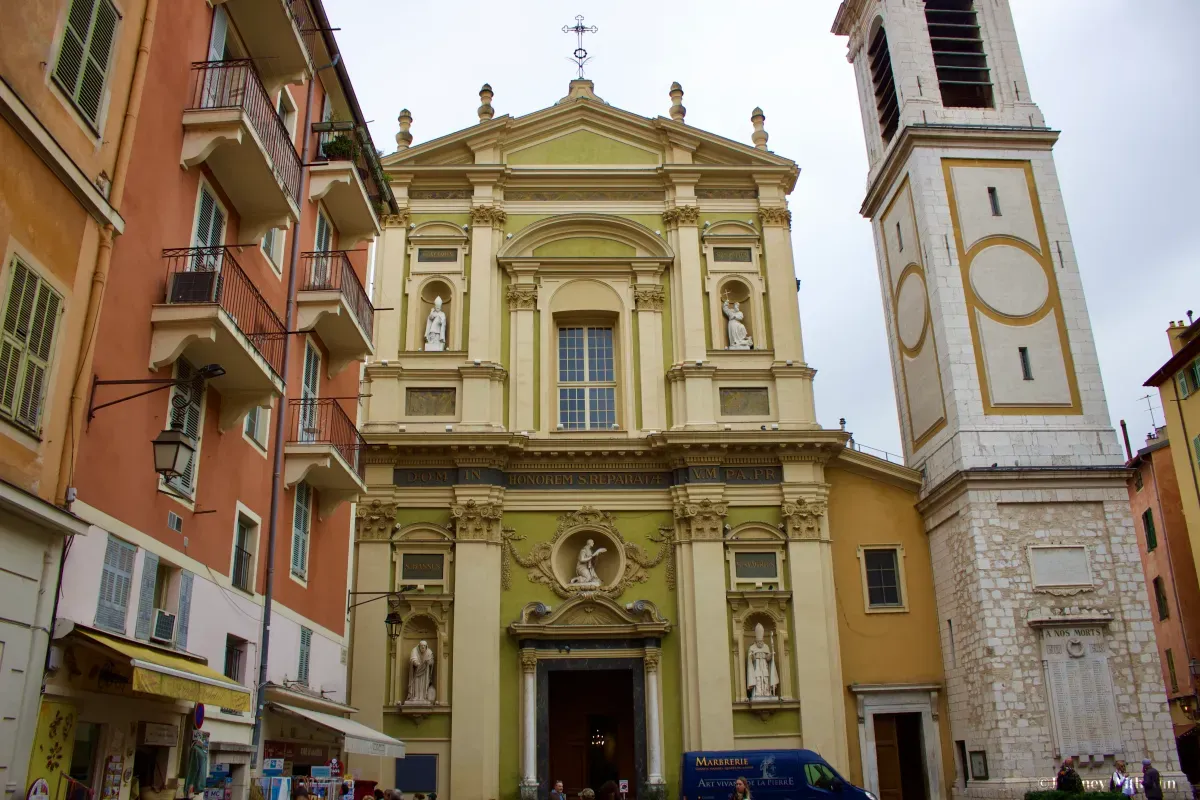
Sainte-Réparate Cathedral, Nice. Click the image to enlarge it.
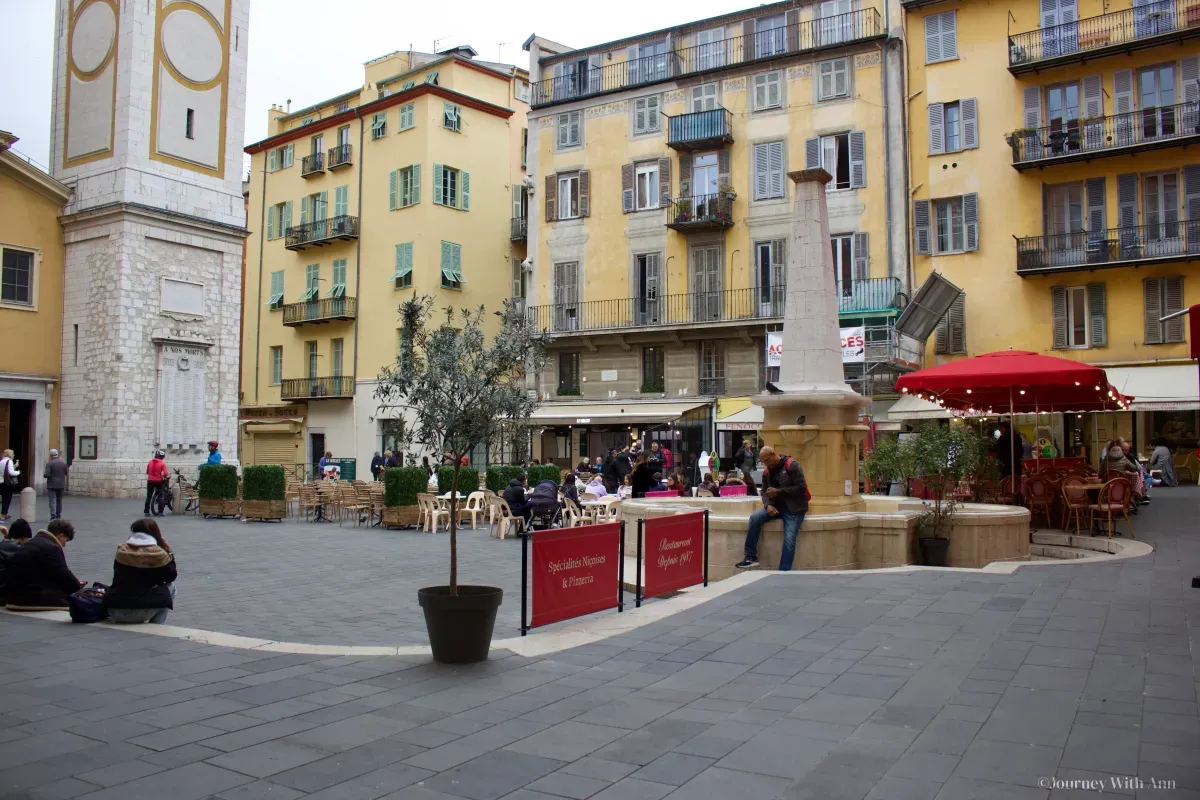
Place Rossetti, Nice. Click the image to enlarge it.
More places worth seeing in Nice
With more than two or three days, you can add Jardin Albert Ier, the exterior of the Hôtel Negresco, Palais de la Méditerranée, Nice Opera, Château Cemetery, the Basilica of Notre-Dame de l'Assomption, Sainte-Alexandra Russian Church, Libération Market, Gare du Sud, Musée des Beaux-Arts Jules Chéret, Musée International d'Art Naïf Anatole Jakovsky, Phoenix Park, the Côte d'Azur Observatory, the Bellet vineyards, Place du Pin, Rue Bonaparte, and the coastal paths beyond the port..
The Musée d'Art Moderne et d'Art Contemporain, or MAMAC, would normally belong on a list of Nice's major museums. It is currently closed for a renovation project that began in 2024 and is expected to last several years, according to the City of Nice.
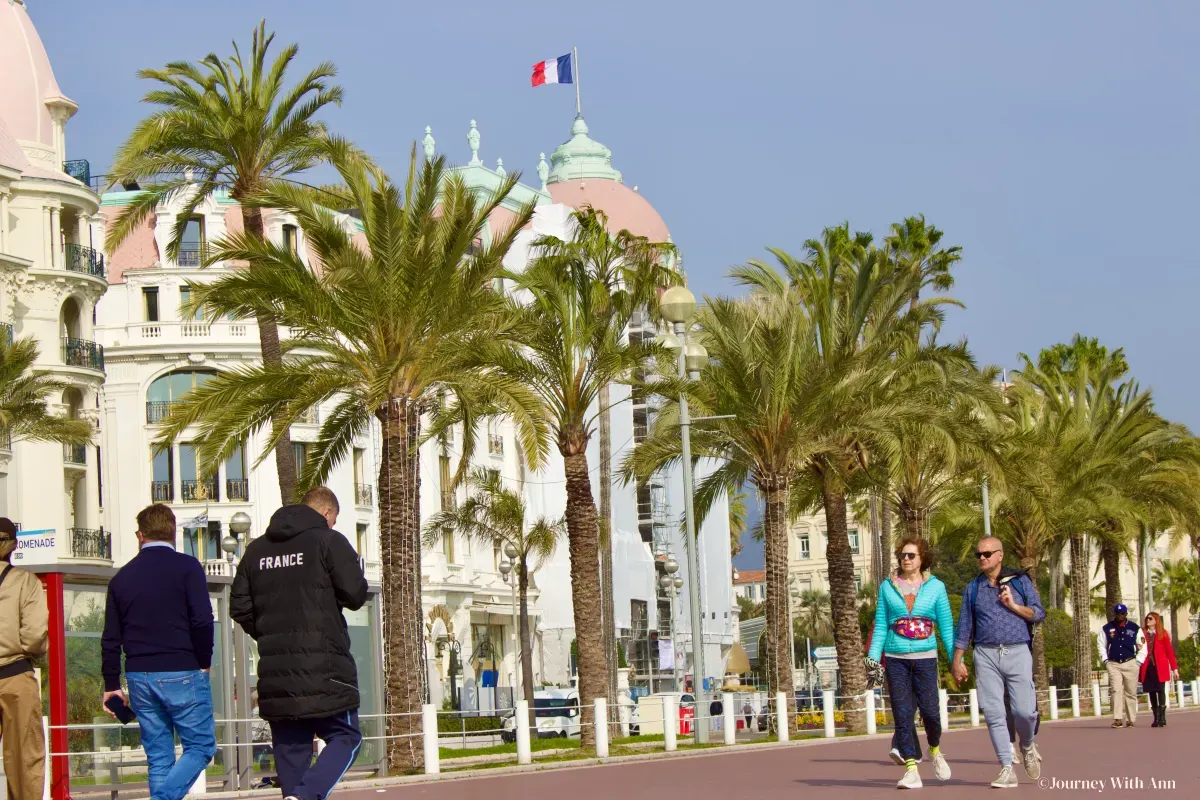
Negresco, Nice. Click the image to enlarge it.
Best photo spots in Nice
Nice is incredibly photogenic, but the biggest attractions do not always produce the most interesting pictures. Some of the locations below give you the classic views everyone knows. Others are easy to walk past. These are the spots I would prioritize for a mix of recognizable Nice scenes, Mediterranean coast, architecture, and a few less obvious angles.
- Rauba CapeuThis is the classic postcard view and one of the city's most photographed places. Stand near the #ILoveNice sign and frame the curve of the Baie des Anges, the sea, and the Promenade des Anglais behind it.Morning brings stronger blue tones to the water. Late afternoon and sunset produce softer, warmer light.
- Bellanda TowerBellanda Tower is a slightly less obvious alternative to the main Castle Hill viewpoint. From here, you can photograph the roofs of Vieux Nice, the sea, and the curve of the coast without being quite so far above them.Choose it when you want a panorama that feels closer and more detailed than the classic view from the top of Castle Hill.
- Castle Hill, Port Lympia sideMany visitors climb Castle Hill, photograph the Baie des Anges, and leave. Do not make that mistake. Cross the park to the opposite side and look down over Port Lympia. The colorful buildings, yachts, breakwater, and Mont Boron create a completely different view of Nice.
- Ponchettes steps above Cours SaleyaThis viewpoint is easy to miss because most people stay at street level. Climb the steps above Cours Saleya and look back across the market, rooftops, and surrounding streets of Vieux Nice. The height makes the market's colors and layout much more visible.
- Place Masséna at nightPlace Masséna photographs well during the day, but I think it becomes far more interesting after sunset. The red façades, black-and-white paving, Fontaine du Soleil, tram lines, and illuminated figures by Jaume Plensa make a stronger composition once the square lights up.
- Port LympiaThe port has several good angles, so do not stop at the first one. Walk around until you can frame the traditional pointus fishing boats against the warm-colored façades. The contrast between the small boats, larger yachts, and surrounding architecture is what makes the harbor so photogenic.Early morning is best if you want softer light and a quieter port.
- Mont Boron and Fort du Mont AlbanMont Boron is one of the best places for broad panoramic photographs. The upper viewpoints face Nice and the Baie des Anges on one side, with Villefranche-sur-Mer and Saint-Jean-Cap-Ferrat opening up on the other. It is usually much quieter than Castle Hill too.
- Cap de NiceCap de Nice produces a very different photograph from the polished Promenade des Anglais. Here, you find rocky coves, cliffs, small swimming places, coastal paths, and deep blue water. The scene feels more natural and less obviously urban.
- Cimiez Monastery GardensThe gardens around Cimiez Monastery are among the quieter photo locations in Nice. Flowers, symmetrical paths, greenery, historic architecture, and views from the hill create photographs that feel calmer and more romantic than the busy center.
- Le PlongeoirLe Plongeoir is one of Nice's most unusual coastal photo locations. The restaurant sits above the sea on a rocky structure and can look almost suspended over the Mediterranean. Even if you are not eating there, the surrounding coastal walk gives you several views of it.
- Place GaribaldiPlace Garibaldi works especially well for architectural photography. Its yellow façades, arcades, cafés, and trompe-l'œil details give the square a distinctly Italian feeling. Walk around before choosing your angle. The perspective changes more than you might expect.
- The Negresco and the blue chairsSometimes the most recognizable photograph is also one of the simplest. Frame one of the blue chairs on the Promenade des Anglais with the Mediterranean, palm trees, and the pink dome of the Hôtel Negresco behind it. The result is unmistakably Nice.
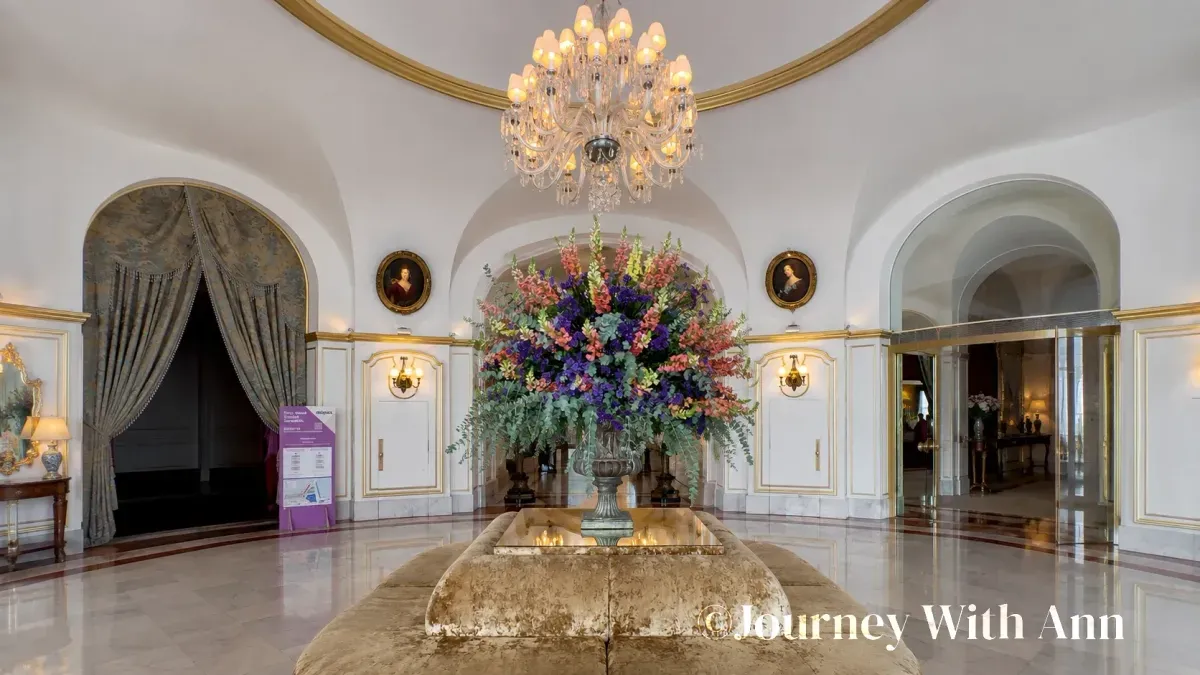
Hotel Negresco, Nice. Click the image to enlarge it.
Plan your Nice itinerary for 1, 2, 3, or 4 days
If you are deciding how many days to spend in Nice, I have made a separate itinerary for stays of 1, 2, 3, or 4 days. It includes realistic walking times between attractions, suggested routes, and notes on the parts of the city that feel more tiring than they look on a map.
The routes help you combine nearby sights without squeezing too much into a single day. You can find them in my Nice France itinerary for 1, 2, 3, or 4 days.
Best day trips from Nice by train
Nice is a practical base for exploring the French Riviera without changing hotels every night. Monaco, Cannes, Villefranche-sur-Mer, Èze, Antibes, Menton, and Saint-Jean-Cap-Ferrat are all within reach, often by direct regional train or a simple local connection.
I traveled from Nice-Ville to Monaco and Cannes myself. Both trips showed me how easy it can be to explore the Riviera by train. They also taught me that the return journey, especially from Monaco, may need a little more planning than the outward trip.
My full guide to the best day trips from Nice by train covers realistic journey times, the easiest routes, what to expect in the evening, and the details that are easy to miss while planning at home..
What should you not miss in Nice?
On a first visit, I would prioritize Vieux Nice, Cours Saleya, Castle Hill, Rauba Capeu, Place Masséna, and the Promenade des Anglais. Together, they introduce you to the city's historic streets, Mediterranean atmosphere, famous viewpoints, public squares, and the coastline that makes Nice so recognizable.
With more time, add Port Lympia, Cap de Nice, Mont Boron, and Cimiez. They show a quieter and greener side of Nice, with fewer people than you often find around the main first-time attractions.
Do not try to fit everything into one day. Nice is walkable, but the distances add up once you begin wandering through Old Town, climbing to viewpoints, stopping at markets, taking photographs, visiting museums, and spending time beside the sea.
Some of the moments I remember most did not happen at the biggest attractions. They happened between them: turning into another colorful street in Old Town, seeing the Mediterranean at the end of an alley, finding a quiet viewpoint above the coast, or realizing that there was no reason to rush.
The famous places in Nice are worth seeing. Leave enough room in your itinerary to enjoy the city between them too.
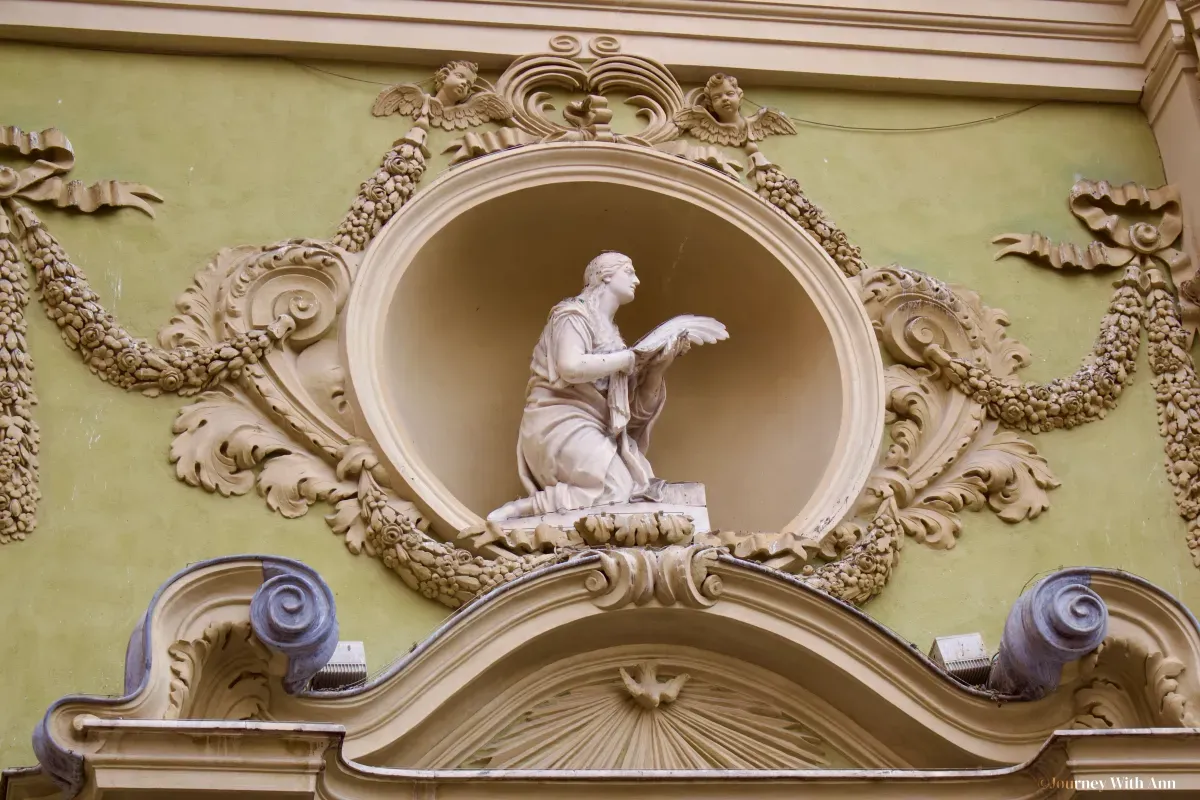
Sainte-Réparate Cathedral, Nice. Click the image to enlarge it.